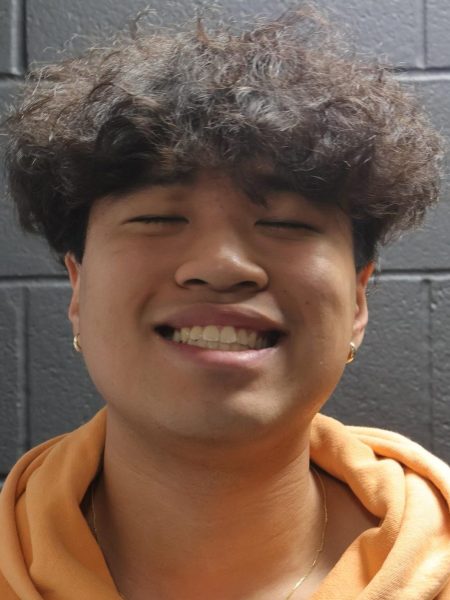
















Senior Rahul Mandava is a multiple-time national champion in gymnastics. He’s represented Team USA four times, and soon, he’ll be serving in the U.S. Navy as a student athlete.
Q: How did you start gymnastics?
A: I began gymnastics recreationally at a very young age, following my older brothers ahead of me. However, it became competitive around the time I turned 6 years old, and it has taken off since then. Even at a young age, I enjoyed the thrill and rush gymnastics provided, and [I] knew that it would be the sport for me.
Q: What do you love about being a gymnast and what’s your favorite memory?
A: I love the mix of creativity and precision: routines let me express myself in a unique way, but at the same time every skill has a clear, technical goal. I have accomplished a lot in gymnastics such as becoming a national champion, and those memories are amazing. However, my favorite memory in this sport would have to be returning to the competition floor for the first time following a major wrist surgery: that day reminded me why I do this — the focus, the adrenaline, and the joy when everything clicks overwhelmed me with emotion in that moment.
Q: How would you describe yourself as a gymnast? What makes you unique?
A: I pride myself in being consistent, not just in competitions, but in training as well. I bring a unique energy to the gym and to meets that not every gymnast expresses, and I believe I excel at encouraging my teammates and creating a competitive, energetic environment wherever I go.
Q: What goes into being a gymnast on the national level? How do you train physically and mentally?
A: Physically it’s daily practice: skill sessions, repeating routines, strength/conditioning, flexibility work, and injury prevention. Mentally, I use visualization, routines for pre-competition focus, and goal-setting with my coaches. I track small progressions — breaking big skills into measurable steps — and build confidence by rehearsing pressure situations in training.
Q: What goes through your mind before (and as) you compete?
A: Before competing, I run through my routine in my head — key cues, where to breathe, and quick reminders for correct techniques. I tell myself to trust training and to stay present: if something goes off, I focus immediately on the next skill. In the high-pressure moments, I try my best to block out all the noise, control my heartrate, and let the preparation carry me to success.
Q: You’ve been named to the USA National Team four times now. What is it like representing your country, and what does that mean to you?
A: Being a member of the USA National Team is not something I take lightly. Having success comes with amazing opportunities like this, but it also means that you are under a microscope and you have more pressure; not just from coaches, but also from teammates and younger gymnasts looking up to you. Being on Team USA has been a unique opportunity to be a part of a mission bigger than any individual, and it means a lot to me to be able to represent my country.
Q: Take me into what it’s like competing at events like the Xfinity National Championships. What is the process and experience like?
A: Big championships are a mix of meticulous routine prep and intense focus. The most important thing for me when I get to an important competition is to replicate everything I do at home. Introducing the familiarity of my usual routine builds confidence and allows me to handle the pressure that is easily felt at competitions such as Xfinity Champs. The lights are brighter and the weight is heavier at meets like this, but that also means having success feels even greater and the opportunities that can arise from competing well are endless.
Q: You come from a family of elite gymnasts. What is that like? How do you handle the pressure of following them and how has their expertise helped you? Is there a sense of competition to it?
A: Growing up with two older brothers who were nationally-competitive gymnasts as well gave me an early map of what’s possible and realistic expectations. There is pressure, but knowing that I’m forging my own path and accomplishing great things ensures that I don’t get caught up in it. My brothers have been instrumental in my development and successes, and I know that they will always be rooting for me.
Q: You committed to compete at Navy, who’ve consistently been a top-15 program in the nation for over a decade. How was the recruiting process for you and what led you to making that final decision?
A: The recruiting process involved visits, conversations with the coaching staff, and seeing how the program’s values aligned with mine. I chose Navy because of the balance between academic rigor and a team culture that emphasizes discipline, leadership, and support. Plus, I believe having the privilege to serve my country was appealing, and I felt the opportunity to graduate as a Naval Officer would greatly propel my future career.
Q: Your USA Gymnastics account says that your goal is to compete at the collegiate level. Now that you’ve secured a spot to do so, what’s next for you?
A: Currently, I am focused on finishing my junior career off as best as possible. I want to enjoy the last few months I have with my teammates and experience great memories in our last season together. I am also building strength and consistency so that I am ready to make an immediate impact on the team once I arrive in Annapolis.