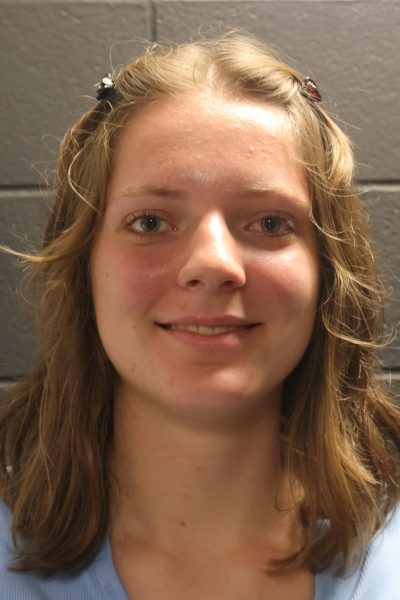















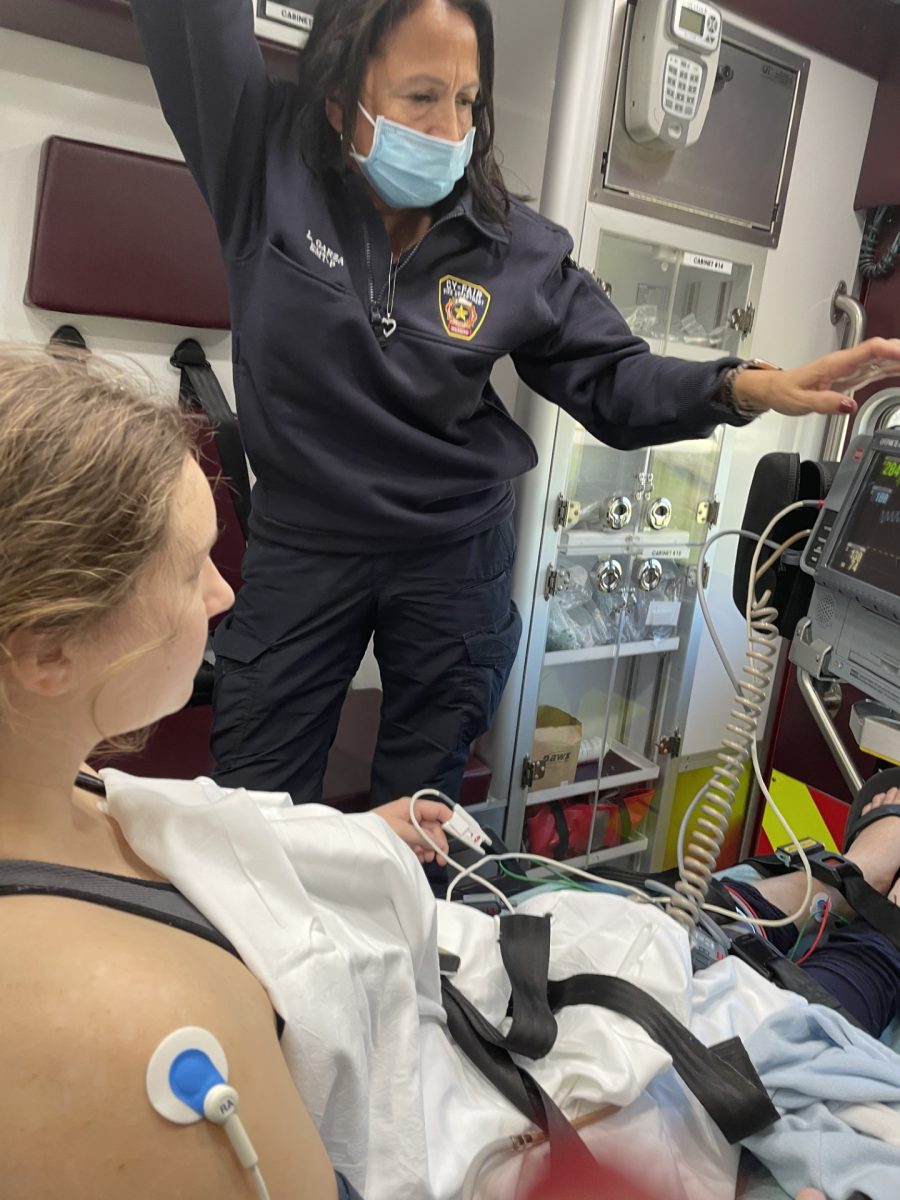
Her chest is burning. She’s gasping for breath. Her heart is still. Literally. Megan McGuire is only 15 years old, but she feels like she’s going to die.
It’s been three years since the doctors at the emergency room had to restart the now-senior’s heart, but the operation still brings back painful memories. This emergency operation was performed because of McGuire’s heart condition. When she was 14, McGuire was diagnosed with a heart condition called Supraventricular Tachycardia (SVT), which means her heart rate goes dangerously fast for long periods of time.
“A normal person’s heart rate is anywhere from 60 to 100,” McGuire said. “And I could have a heart rate that was as high as 285.”
The diagnosis didn’t come as a surprise for McGuire. She remembers the fast heart beats showing up when she was only 10, but she was told she just had anxiety.
“They didn’t believe me for four years,” McGuire said. “When I was 14, I collapsed on the floor when I was getting ready for Schlitterbahn with my mom. She saw me on the floor, and she’s like ‘something’s wrong.’ I think my pulse was 265 then.”
Her mom immediately called an ambulance, and McGuire was rushed to the hospital. She remembers this as a terrifying memory.
“I was inside the ambulance but my mom was running around the house putting a bag together in case we needed to stay the night,” McGuire said. “My pulse was 280-something and I was completely freaking out because it was my first time in an ambulance. I kept screaming that I wanted my mom and the guy in the back with me threatened to sedate me if I didn’t calm down because he was worried I would stress myself out so much my heart would give out.”
After a visit to the ER, she was finally diagnosed with SVT. Following the diagnosis, she had to undergo two intensive heart surgeries because her condition was so severe. These surgeries involved running a catheter — a thin tube that goes through a vein — up through her leg to her heart, where the doctors burned off the bad pieces of her heart that were making it beat too fast.
“I have little black scar marks on my heart,” McGuire said. “The chief cardiologist who did the surgery drew out a picture of it. And it was basically little burn marks on the inside of my heart.”
But the first surgery she got didn’t work. While her family was saving up to get her another surgery, McGuire had another SVT episode where her heart started beating dangerously fast. McGuire remembers her mom calling the ambulance and being rushed to the ER with a heart rate of 283 beats per minute.
“In the ambulance, they tried to give me IVs. It didn’t work. They had to do an ultrasound in order to [give me the] IV,” McGuire said. “They tried to wait it out, but I had already had a pulse above 200 for about two hours by then.”
Enter: operation heart restart.
To stop her heart, the doctors had to feed a drug through McGuire’s IV that stopped the heart muscle from beating altogether. And her heart wouldn’t be able to start on its own, the doctors had to give her another drug to get it beating again.
“That was probably the most traumatic visit to the ER because not only did they stop my heart, but they didn’t really explain to me what was going on,” McGuire said. “I just looked over and the nurse was shooting [the medicine] into my IV and I’m like ‘oh, God.’ It felt like my heart was being burned out from the inside out. It felt like I couldn’t breathe. I could feel my heart not beating. My mom told me it was only like 5 or 10 seconds long, but to me, it felt like 10 minutes.”
But McGuire lived to tell the tale. A few months later, she was able to get her second catheter surgery, which was just like the first. This time, it was successful.
“After the first surgery, it took me a month before I could go back to school,” McGuire said. “The recovery wasn’t long because it wasn’t open heart surgery. It was just catheter surgery. But the wounds in my legs had to heal, and because I was in school, we walk a lot, right? So I had to wait for the surgical wounds to close up, and for the swelling to go down because my legs were really swollen from the catheters.”
McGuire faced many challenges as a result of her condition. As a student athlete, not being able to do the sports she loved was a huge block in her path.
“Before my surgery, I wasn’t even really allowed to walk outside my house without someone with me because I could just drop on the floor and wouldn’t be able to call someone on the phone myself,” McGuire said. “So I couldn’t exercise at all for four years. I couldn’t go for walks. I couldn’t really do anything. So I gained a lot of weight.”
Because she hadn’t been active for years, her stamina had suffered. After her surgery, she was allowed to exercise again, and at the beginning of sophomore year, McGuire joined the junior varsity swim team.
“I faced a lot of mental challenges,” McGuire said. “When I joined JV swim sophomore year, and water polo junior year, everyone was always in better shape than me. I took it really personally that I was in a lot worse shape than everyone else because I was heavier than everyone else, and my stamina was worse than anyone else’s. My mom had to constantly remind me that, OK, well, they’ve been staying in shape and staying in summer league [swim team] or year round [swim team] for years while I’ve been immobile at my house. But I had a really hard time with that. I still have a hard time with that.”
Now that she’s had time to look back on her life, she says her heart surgeries taught her to appreciate life.
“Everyone takes it so for granted, like being able to do sports or being able to go for a run,” McGuire said. “I get down in the dumps and I’m like, ‘oh, man, I suck at this. I’m slow. I’m so bad at it’ and then I remind myself, ‘yeah, but you know what? Three years ago, I would’ve gotten on it and I would’ve keeled over.’ It’s a lot better now. You just appreciate things a lot more.”